Written by Lucas Smith
Bloody Sunday refers to the violent incident that took place in Derry on January 30th of 1972, when the British Army regiment tasked with policing a civil rights march opened fire on protesters, killing several and injuring several more. That February, a tribunal was convened under the leadership of Lord Widgery to examine the events of that day. The conclusions of this official British inquiry essentially functioned to justify the actions of the British soldiers and invalidate arguments on behalf of the protesters killed. The way a definition of events is established therein speaks volumes to the distinction of licit versus illicit violence under way. Lord Widgery’s conclusions from this inquiry function to affirm the violence perpetrated by these British paratroopers against these protestors as decidedly licit, even if allegedly excessive. First and foremost, it is stated that this incident would not even have occurred were it not for the instigation of the protestors in organizing an, “illegal march,” and creating, “a highly dangerous situation,” that rendered the violent clash, “almost inevitable” (Lord Widgery, CAIN Web Service). So though that day ended with no casualties for the British military but thirteen protestors dead, responsibility for the clash was still attributed to the protestors themselves, in a prime example of colonialist delineation of their forces’ violence as licit. The diction therein is exceptionally important to this delineation. There is discussion of the sincerity of intentions and such arbitrary remarks appear as, “There is no reason to suppose that the soldiers would have opened fire if they had not been fired upon first,” (Lord Widgery, CAIN Web Service) asserting a decisive interpretation through hypothetically phrased claims with no means to be supported by evidence. Furthermore, the closest that the report gets to identifying the soldiers’ actions as at all objectionable was to claim that the response ranged from a “high degree of responsibility” to “firing [that] bordered on the reckless” (Widgery, CAIN). That qualifier of “bordered on” is imperative in that it operates to ostensibly acknowledge the potential for minor excess while not even confirming that. One could argue for diction to the effect of ‘a wanton disregard for civilian safety,’ but the report only goes so far as to consider “reckless” and then not even confirm it. Overall, with repeated usage of terms such as “inevitable” and “inescapable,” the report portrays the events of Bloody Sunday as a rather unfortunate incident that was simply bound to happen due to the actions of the protestors – an instance of licit colonial violence by well-meaning security forces with their hands pushed by “hooligans” (Widgery, CAIN). It is worth noting that the issue was reopened in a new inquiry, led by Lord Saville, in the midst of the peace process, and ran until 2010. This Saville Inquiry reached starkly different conclusions and did not seek to justify the actions of the British soldiers or distinguish their violence as licit. But it was the Widgery inquest that addressed the issue in 1972, and demonstrated the way the British colonial state framed licit versus illicit violence in that context at the time.
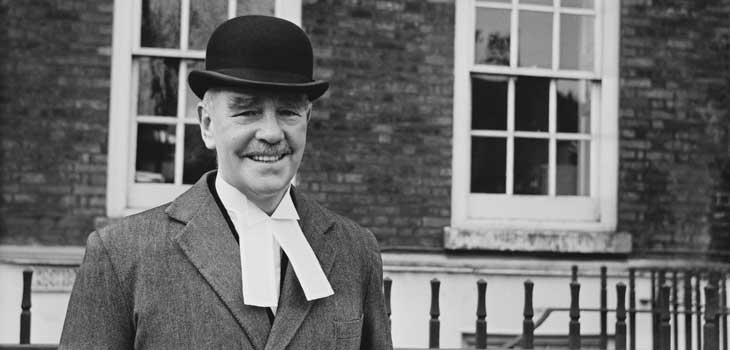
“For the most part the soldiers acted as they did because they thought their orders required it.”
– Lord Justice Widgery, ‘Summary of Conclusions,’ Report of the Tribunal – https://cain.ulster.ac.uk/hmso/widgery.htm#conclusions
Alongside this delineation of licit versus illicit violence is the factor of the boundary between combatants and civilians, an element that connects the ramifications of Bloody Sunday to those of Bloody Friday. The identification of participants through particular terminology is significant to the definition of this boundary and the justification of repressive violence as licit. The Widgery Report used terms such as, “hooligans,” to describe the protestors, but the BBC television correspondent who made the first report on the events, Peter Stewart, went so far as to refer to them as, “terrorists,” (Stewart, Irish Times). It should be noted that the BBC did not have a consistent record of the most unbiased journalism through The Troubles, as evidenced by the BBC interview of the McConville children after the abduction of their mother. In his report that day, Stewart claimed that the British paratroopers had been met “with a fusillade of terrorist fire” (Stewart, Irish Times). Stewart conceded in 2001 that elements of his report, particularly this description, were inaccurate and based more in emotion than evidence. The nature of this concession did not provide a true disavowal of the sort of delineations and designations he and other British authorities were undertaking during The Troubles, however. He stated, “‘I used the word ‘terrorists’ because in my view people who try to overthrow the civil power by violence are terrorists in a democracy’” (Stewart, Irish Times). With this, it is clearly apparent that even in retrospect, parties of The Troubles still engage in the boundary delineation of what violence was licit versus illicit and the designation of what people were viable targets for the violence so carefully justified as licit.
*Below are included links to two clips from BBC coverage of the day’s events on January 30th. John Bierman, the other primary BBC correspondent on site, interviewed General Robert Ford of the British Army and Father Edward Daly, a local priest helping those shot in the midst of the violence. General Ford’s remarks provide another readily apparent example of this framing of licit versus illicit violence, both in that he was the commanding officer of the British forces and in his diction and general attitude. Father Daly recounts quite a different description of the violence shortly after helping to move a teenage boy who had been shot dead – later identified as Jackie Duddy.
General Ford: https://www.bbc.co.uk/programmes/p00nm4k6
Father Daly: https://www.bbc.co.uk/programmes/p00nm4j9
Works Cited
Grogan, Dick. “BBC man admits his report was not factual.” Irish Times. May 17, 2001. https://www.irishtimes.com/news/bbc-man-admits-his-report-was-not-factual-1.308282. Accessed November 22, 2020.
Goulden, Judith. “Lord Justice Widgery and Me.” New Law Journal. July 29, 2020. https://www.newlawjournal.co.uk/content/lord-justice-widgery-and-me. Accessed December 11, 2020.
Widgery, The Rt. Hon. Lord. “Report of the Tribunal appointed to inquire into the events on Sunday, 30th January 1972 [Widgery Report].” Page compiled by Fionnuala McKenna. CAIN Web Service. https://cain.ulster.ac.uk/hmso/widgery.htm#conclusions. Accessed November 4, 2020.
 A Reader's Guide to Say Nothing