Written by Lucas Smith
The violence of The Troubles was both inspired by and expressed through factional boundaries. Often the more diametric examples of such – Protestants against Catholics, Republicans against Unionists, the British Army against insurgent paramilitaries – overshadow the more internalized examples, instances of factionalism within a faction. The split between the Official I.R.A. and the Provisional I.R.A. provides vision into the implications of such internalized factionalization, and its consequences in the context of a conflict like The Troubles.
Common in any violent civil struggle as intricate as The Troubles is a severe multiplicity of motivations and goals among the actors therein engaged. As circumstances evolve, differing directions of response can engender divergences on such bases. The Belfast riots of August 1969, during which the Royal Ulster Constabulary – particularly the ‘B Specials’ – was at least complacent towards, if not actively supporting, the violence and arson undertaken by Unionist mobs, constituted such a development. Following these attacks, many Belfast Catholics felt that the I.R.A. had failed to defend them in their hour of need. Brendan Hughes, the renowned Provisional I.R.A. commander, remarked on the situation in his Boston College interview, stating, “There was no weapons there, and left the people unprotected. The I.R.A. were not capable of protecting the people of ‘69” (Segment 2, 0:22). As blames of shortcomings were cast, the body of the Irish Republican Army split and the Provisional I.R.A. emerged in distinction from the Official I.R.A., with a distinct intent towards renewed defensive intensity. In such, the Battle of the Bogside and the chaos surrounding those events was integral to the inception of the Provisional I.R.A. and what the group became.
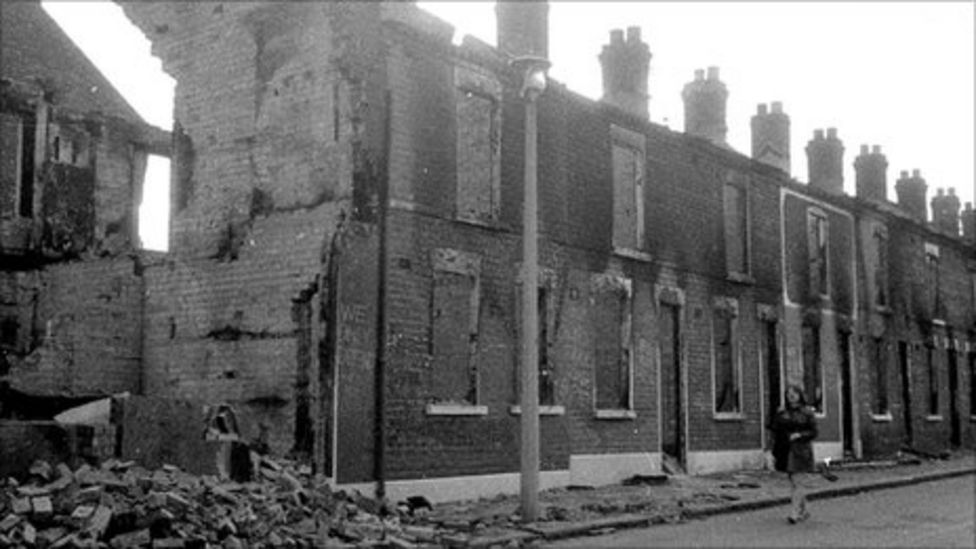
Although the Provisional I.R.A. went into 1970 the minority splinter group of what would thus become known as the Official I.R.A., they soon enough became the dominant organization. A large part of this came from the intensification of sectarian violence that occurred within those next two years. This divergent wing of the paramilitary organization became increasingly attractive in its clear dedication to defense of Catholic areas, and as violence worsened, it was the Provisionals who opted to move on the offensive to achieve their Republican goals. Seán Mac Stíofáin affirmed this intent with his summary statement of strategy, “escalate, escalate, escalate” (Stíofáin, as quoted by Keefe, 50). With such outrages as Bloody Sunday, this embracement of wholesale war against an oppressive opposition filled the ranks of the Provos, while the Officials fell increasingly by the wayside in their dwindling action towards physical force.
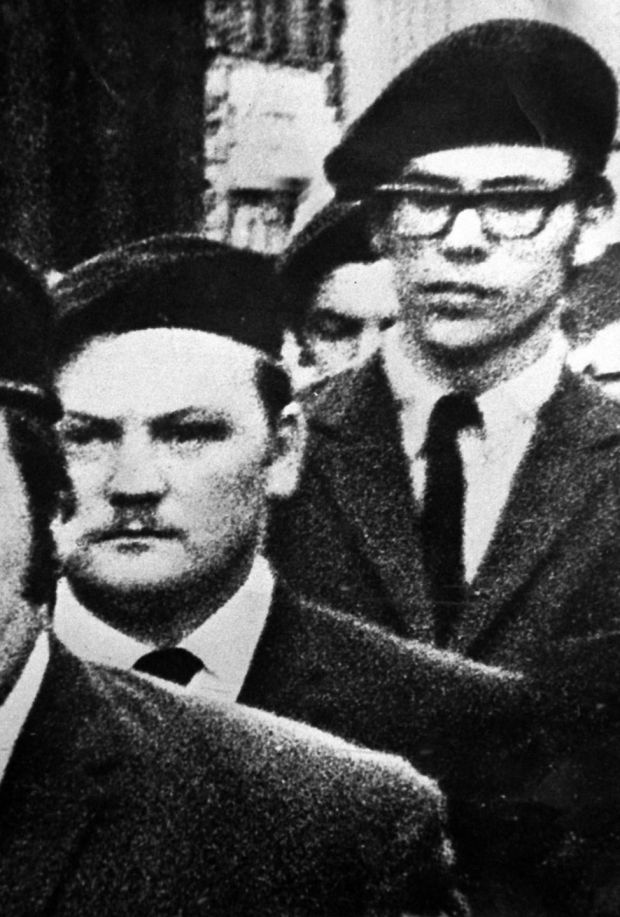


The split of the Provisional I.R.A. from the Official I.R.A. and the according ascendance of the former offers an intriguing demonstration of the boundary operation of such internal factionalism. A context as complex and dynamic as that of the Troubles provided a myriad of instances in which differing values and approaches within a sect could produce such an outcome. Changing circumstances of this nature, however, indicate how a minority splinter sect may or may not rise to dominance. In the case of the Provos, their dedication to a perceived historical lineage of resistive violence and prosecution of such through increasingly offensive operations proved the response that moved them into the mainstream in the early 1970s. But, as the Provos moved increasingly more towards the ballot box and away from the Armalite and the peace process began in earnest, splinter groups such as the “Continuity I.R.A.” and the “Real I.R.A.” broke off in much the same way that the Provisionals had years before. These groups failed to rise to prominence and were accordingly sidelined into radical paramilitary groups made up of only those physical-force nationalists so dedicated to violence that they refused to abandon it, such as Marian Price. This stands as a display of the impact of the trends and tides of the day in ultimately determining which sub-faction will rise and which will not.
Works Cited
Doyle, Colman. “A woman IRA volunteer.” Raidió Teilifís Éireann. June 17, 2020. https://www.rte.ie/brainstorm/2020/0616/1147804-troubles-northern-ireland-colman-doyle-photo-woman-ira-belfast-1973/. Accessed December 14, 2020.
“Houses in Bombay Street.” BBC News. March 7, 2011. https://www.bbc.com/news/uk-northern-ireland-12663302. Accessed December 14, 2020.
Hughes, Brendan. As quoted in Voices from the Grave. “Voices from the Grave – Documentary.” Boston College Subpoena. Video Segments 1-9. https://bostoncollegesubpoena.wordpress.com/supporting-documents/voices-from-the-grave-documentary/#vog. Accessed November 23, 2020.
Keefe, Patrick Radden. Say Nothing: A True Story of Murder and Memory in Northern Ireland. New York, NY. Anchor Books. 2019.
Kernoghan, Justin. “Gerry Adams (right) and Martin Meehan (centre).” Irish Times. January 27, 2020. https://www.irishtimes.com/culture/books/we-serve-neither-queen-nor-commisar-the-birth-of-the-provisional-ira-1.4150357. Accessed December 14, 2020.
“Three Volunteers of the South Fermanagh Brigade.” An Sionnach Fionn: Irish News, Politics, Culture. https://ansionnachfionn.com/2016/05/27/who-won-the-irish-british-troubles/. Accessed December 14, 2020.
 A Reader's Guide to Say Nothing