Written by Kathryn Sirianni
As a result of the London Bombings in 1973 Dolorus Price and her sister Marian were sentenced to serve time in the Brixton Prison. The sisters were sentenced to serving time in England as prisoners, which they felt was unjust. Dolorus and Marian Price demanded to be recognized as political prisoners so that they could serve their time in Northern Ireland. However, following in the footsteps of Terence MacSwiney and many other Nationalists during the Troubles (including Bobby Sands), the Price sisters enacted hunger strikes as a form of resistance. The fasting or hunger strikes were meant to “express dissent or rebuke” (Keefe 177). In other words, Price was using the hunger strikes to delegitimize the British and relinquish control over the only thing she could- her body. The hunger strikes were a long and drawn out protest that led to Price being force fed, leaving her with lifelong trauma. A year and a half after her release from prison she announced that she suffered from anorexia as a result of her hunger strike. Price’s issues with food make sense as she had gone “206 days on hunger strike” (Keefe 190) and was force fed for survival. In an interview years after her release Price said that the hunger strike “alienated us from the process of sustenance, the whole process of putting food in your body” (Denhoed). When someone goes a long time without proper sustenance, their body slowly starts to “accept” this new form of starvation or lack of nourishment. Price’s relationship with food became negative as she had gone a long time without it, making her body react in a negative way to food and leading to her development of anorexia.

https://alphahistory.com/northernireland/dolours-marian-price/
Price’s development of anorexia was most likely not brought on in the “typical” ways of negative body image; rather, her complex relationship with food was created during her hunger strikes as she starved herself and then was eventually force fed. When Price announced her anorexia she “noted that as an illness it was really all about control” (Keefe 221). Price had always been fueled by being in control, as she controlled many IRA missions, including her involvement in the London Bombings. However when she was thrown in prison, her “lack of control” forced her to participate in hunger strikes. Price’s high demand for control is evident even during being force fed, shown through a letter she wrote: “and while I am not in a position to offer physical resistance that’s not to say I can’t mentally resist and reject the whole horrible happening” (Keefe 181). Price’s need for control over her body deepened during the hunger strikes it shifted from physically resisting (food) to mentally resisting (force). This idea shows that Price fought for control even as she was powerless.
Price was an atypical woman who did not mentally or physically succumb to a higher power [the British] during her hunger strikes. Price’s demand for control led her to developing anorexia, which resulted from her mental and physical traumas during the hunger strikes. For outsiders Price’s development of anorexia humanized her as she was typically viewed as a nationalist “hero”. Price was not only viewed as heroic for her bravery as a warrior, but also for being a female who fought and fought hard for her beliefs. Price did not simply participate in the Troubles, but she controlled much of the Troubles through her missions in the IRA and during her hunger strikes. For women and young girls in Ireland reading about Price’s development of anorexia after her involvement in the hunger strikes could have been riveting.
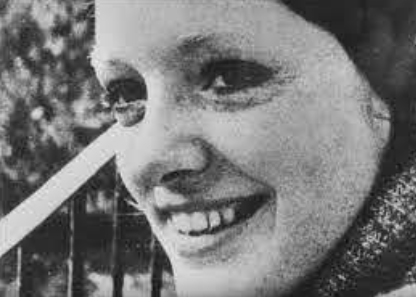
Price’s influence on women in Northern Ireland, can be used for understanding gender roles in nationalist discourse. Women in Northern Ireland were under gender constrictions that were created by men and established throughout nationalist society. This society was not in support of women fighting for the “cause”, as they believed they should stay within the home. In the Constitution of Ireland it states, “In particular the State recognizes that by her life within the home, women give to the State a support without which the common good cannot be achieved” (Article 41). This law clearly states that women should be inside the home and support the state, meaning to watch and not be involved in politics. Although at the time of the Troubles womanhood was a bit more progressive, it was still most likely seen as unusual for a woman to be fighting and enacting in war. Dolorus Price’s involvement in the Troubles was not only important because she was female, but also important because she took control over her [large] involvement in the Troubles. Price was a Nationalist leader in the Troubles, and she was strong in the fact that she controlled every situation she was in, including her imprisonment. Nationalist women, specifically, probably would have been in awe of Price’s continuation of control.
Price’s development of anorexia is important to understanding nationalist womanhood and power. Price’s anorexia is more than just a physical and mental illness that resulted from her hunger strikes, but rather a consequence. Price’s anorexia developed because she needed to control something, so in turn she took control over her body through starvation. Price’s development of anorexia shows not only how affected she was by the Troubles, but also about how the constant “need for control” can be harmful. Although Price’s position for a female in a large position of power during the Troubles may be inspiring [to other Nationalist Women], her power (and control) also ultimately led to her development of anorexia. For the public, Price’s announcement of her illness, gave them the realization that Price was not this “superwoman”, rather just a human whose body developed a serious illness as consequence for her actions.
Works Cited
DenHoed, Andrea. “The Trauma of the Troubles.” Dissent Magazine, 14 Mar. 2020, http://www.dissentmagazine.org/article/the-trauma-of-the-troubles.
“Dolours and Marian Price.” Northern Ireland, 15 May 2019, https://alphahistory.com/northernireland/dolours-marian-price/
Illustrated, Anchor, 2020. The Irish Constitution. Dublin: Butterworths, 1994.
IrishAmericaEditor. “Wild Irish Women: A Most Sorrowful Mystery.” Irish America, 16 Sept. 2020, http://irishamerica.com/2019/05/wild-irish-women-a-most-sorrowful-mystery
Keefe, Patrick Radden. 2019. Say Nothing: A True Story of Murder and Memory in Northern Ireland. New York: Anchor Books.
Urban, Mike. “A Brief History of HMP Brixton, London’s Oldest Prison by Chris Impey.” Brixton Buzz, 19 Mar. 2014, http://www.brixtonbuzz.com/2014/03/a-brief-history-of-hmp-brixton-londons-oldest-prison-by-chris-impey/#:%7E:text=It%20opened%20in%201819%20when,of%20up%20to%20two%20years.
 A Reader's Guide to Say Nothing