Written by Kathryn Sirianni
In the context of the Troubles as represented in Say Nothing, blue ribbons were used to raise awareness of people who had disappeared. The IRA as well as the Unionists tended to take people out of their homes who were convicted of supporting the other side. This could include being a spy or informer for the opposing side. In the case of Say Nothing, Jean McConville was one of the victims of this type of disappearance. McConville was accused of being an informer for the Unionist forces, so the IRA (specifically Gerry Adams), ordered her to be killed and her body to be discarded. This happened to many others during the Troubles. The disappearances of these people were unsettling and peace could not be rendered until these bodies were found. Those involved with the disappearances were reluctant to tell the locations of the bodies. Leaving the families to search for help from those in a greater position of power. The families chose to send ribbons to prominent figures like Nelson Mandela and Bill Clinton to showcase the disappearances and the lives that needed help in Northern Ireland (Keefe 257). The blue ribbons were meant to draw attention to the injustices behind the disappearances and murders, so sending the blue ribbons to powerful leaders was their way of asking for help and bringing attention to the issues. They wanted peace, and with this peace came finding all of those who had disappeared, like Jean McConville as represented in Say Nothing.
The use of blue ribbons was specifically interesting. In society, ribbons are often worn as a symbol or representation of something. The color of the ribbons specifically is important for what they represent. For example, a pink ribbon usually represents breast cancer awareness and red is worn for drug prevention awareness. Wearing a ribbon is making a statement, and shows support or belief in a specific cause. The fact that the families of the disappeared chose blue ribbons specifically is interesting. Often when thinking of the color blue we think of sadness as the phrase “feeling blue” is used. Which makes sense when thinking of the positions the families were in. However, it is also interesting to think about what the color blue represents in Ireland.
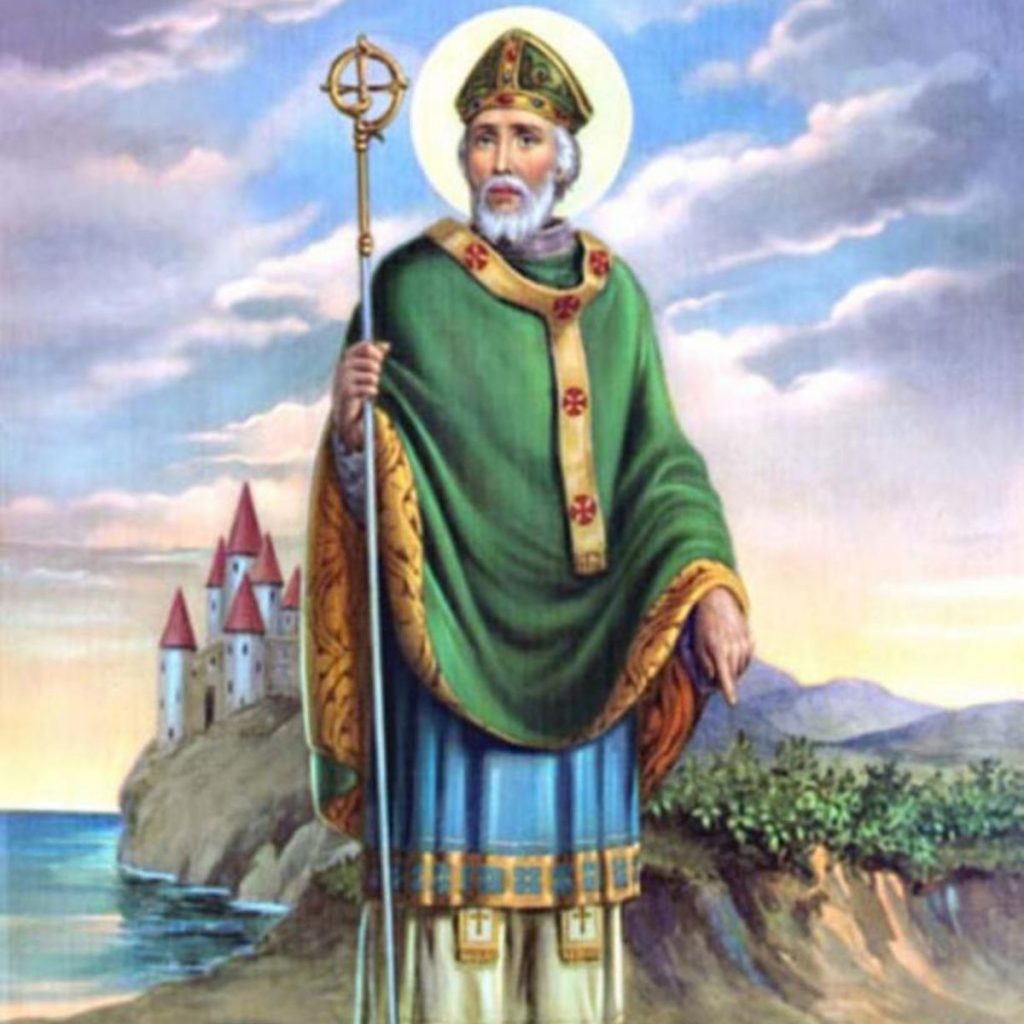
According to Catholics, Ireland was formed around St. Patrick, who was the patron saint that spread the word of God to all of Ireland. After much research historians have found that, “…St. Patrick’s color was blue, as he was often depicted in blue garments” (Halsted 2). Originally Ireland’s color was associated with blue due to their formulation around St. Patrick. The color blue was so influential in Ireland that many members of the “Irish Citizens army wore blue armbands in the Easter Rising of 1916 in attempts to overthrow the British government” (TIME). It is evident that blue is an important color in Irish history. In this sense also choosing the color blue for the McConville children makes sense as they were raised Catholic and were heartbroken by the loss of the mother.
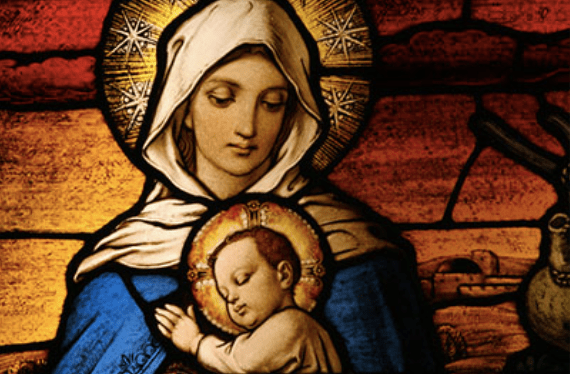
The color blue also tends to be used to represent the Virgin Mary. For Catholics, the Virgin Mary always wearing the color blue represents heaven and purity. Also, “the iconic shade of blue that Mary often wears, captures an expansive definition of motherhood. The Virgin Mary is not only mother to Jesus, but to all humanity” (Fuchs). Blue not only has a religious affiliation, but also a motherly representation. Making blue represent religious purity and motherhood, making it a sensible choice for the McConville children to use to raise awareness for their missing mother.
The color that was once used to memorialize their beloved St. Patrick and Virgin Mary, was soon tainted by the British involvement in Ireland. “Henry VIII assumed the English throne..and declared himself King of Ireland” (Esposito 5), and with that, declaring the national color of Ireland to be blue (like England). Blue has had a complex meaning in Ireland which is why it is a significant choice for the families to use to represent their disappeared loved ones. Specifically, for the McConville children blue represents motherhood and religious affiliation. However, blue not only represents sadness and Irish nationalism, but it also showcases how the British involvement has changed the lives of the Irish people. By using the color blue it can be assumed that the families are representing both the “pure” Irish (where St. Patrick was memorialized and celebrated), but also a time where the British were not involved. However, at the same time, the color blue also says, “look what Britain did to us” and “look how they forcibly changed us”. The color blue has a complex meaning for the Irish people. Choosing the blue specifically sends a multitude of messages, not only about the disappearances of loved ones, but also about British involvement and unwanted violence.
Works Cited
“10 Things You Didn’t Know About St. Patrick’s Day – TIME.” TIME.Com, 16 Mar. 2010, http://content.time.com/time/specials/packages/article/0,28804,1972553_1972551_1972489,00.html.
Esposito, Shaylyn. “Should We Be Wearing Blue on St. Patrick’s Day?” Smithsonian Magazine, 17 Mar. 2015, www.smithsonianmag.com/arts-culture/should-st-patricks-day-be-blue-180954572/#:%7E:text=Patrick%20show%20him%20clothed%20in,known%20image%20of%20Saint%20Patrick.
Fuchs, Margie. “Mary and the Colors of Motherhood | Broad Strokes Blog.” NMWA, 6 Apr. 2020, http://nmwa.org/blog/mary-and-the-colors-of-motherhood/#:%7E:text=The%20Virgin%20Mary%20is%20not,Jesus%2C%20but%20to%20all%20humanity.&text=Deeply%20rooted%20in%20Catholic%20symbolism,was%20associated%20with%20Byzantine%20royalty.
Halsted, Jody. “The Colors of Ireland.” Celtic Culture for Irish Dancers, 28 July 2018, http://celticcultureforirishdancers.com/color-of-ireland/irish-culture.
History.com Editors. “Easter Rising.” HISTORY, 25 Jan. 2019, http://www.history.com/topics/british-history/easter-rising.
Keefe, Patrick Radden. 2019. Say Nothing: A True Story of Murder and Memory in Northern Ireland. New York: Anchor Books.
McIntyre, Anthony. “Gerry Adams’s IRA Years: An Insider’s Account.” The Irish Times, 9 Feb. 2018, http://www.irishtimes.com/news/ireland/irish-news/gerry-adams-s-ira-years-an-insider-s-account-1.3385451.
Nelson Mandela Foundation. “Biography of Nelson Mandela –.” Nelson Mandela Foundation, 2020, http://www.nelsonmandela.org/content/page/biography.
O’Neill, Brian. “St Patrick-Patron Saint of Ireland.” YourIrishCulture, May 2020, www.yourirish.com/history/christianity/st-patrick.
Pelikan, Jaroslav Jan. “Mary | Biography & Miracles.” Encyclopedia Britannica, 2017, www.britannica.com/biography/Mary-mother-of-Jesus.
“President Clinton.” Clinton Foundation, 2019, http://www.clintonfoundation.org/about/president-clinton.
Trueman, C. N. “Henry VIII and Ireland.” History Learning Site, 17 Mar. 2015, http://www.historylearningsite.co.uk/tudor-england/henry-viii-and-ireland.
 A Reader's Guide to Say Nothing