By Jenny Bartholomay
After several false calls, the body of Jean McConville was finally found and identified in October 2003. A man named John Garland found the body by chance while walking near Shelling Hill Beach, a coastal town north of Dublin, and the McConville children identified the body as their mother’s based on the clothes found buried with it. The family held a funeral and reinterred McConville in November, proceeding through the same area of West Belfast that she had been kidnapped from thirty years before. Keefe provides a summary of the discovery, investigation, and funeral at the end of Chapter 25, and closes by describing the significance of the coroner’s finding in the case. Since the IRA did not give any information that led to the discovery, the The Northern Ireland (Location of Victims’ Remains) Act 1999 amnesty policy did not apply, which “had one very serious implication, the coroner declared: ‘The criminal case remains open’” (Keefe, 329). Keefe’s decision to center Say Nothing on the story of Jean McConville makes the discovery of her body an important event in the piece, but analyzing the impact of the discovery on people involved in the Troubles suggests it had a different kind of significance in reality. Although recovering the bodies of the disappeared has become one of the primary focuses of reconciliation efforts and appears to be somewhat effective, this event exemplifies how difficult full reconciliation truly is and suggests it might even be impossible.
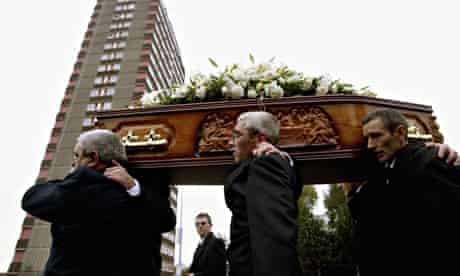
Newspaper articles from the time of the discovery convey the feelings and reactions of both the McConville children and the general public — many of whom continued to hold resentment and anger towards the IRA, making reconciliation seem unlikely. A BBC article, for instance, reported on an apology statement the IRA issued after the discovery and quoted Helen McConville’s reaction that “most of my family needed the IRA to apologize. To me it does not mean anything” (“IRA ‘sorry’ for Disappeared”). The article also included Helen’s quote that “[the IRA] should give all the disappeared back to their loved ones and let them have peace” (“IRA ‘sorry’ for Disappeared”). Taken together, Helen’s unwillingness to accept a vague apology and her demand for the IRA to recover all of the bodies of the disappeared, which time and environmental changes has made an exceedingly difficult task even if the IRA wanted to cooperate, demonstrates how complicated forgiveness and reconciliation may be in Northern Ireland. While recovering the remains of the Disappeared is important to many families, it does not immediately absolve all grievances, as seen in Helen McConville’s statements. The recovery of bodies is ultimately another example of the struggle to find a balance between meaningful acts of reconciliation and feasibility. Besides the logistical challenges the landscape poses, leading members on both sides of the conflict towards negotiation and compromise presents a further challenge. Ultimately, this creates significant doubt about the prospect of reconciliation, as even if the IRA was miraculously able to meet Helen’s requests to find the bodies of all of the Disappeared it is likely that feelings of resentment would persist, making reconciliation difficult to achieve.
References:
“IRA ‘Sorry’ for Disappeared.” BBC, October 24, 2003. http://news.bbc.co.uk/2/hi/uk_news/northern_ireland/3210967.stm.
 A Reader's Guide to Say Nothing