Written by Emily Goldstein
During the early years of The Troubles, it became obvious to British military forces that this was a different type of warfare than the previous traditional style of war. Under the orders of Frank Kitson, hundreds of suspected nationalist/IRA members were rounded up and sent to internment centers. Internment is defined as “the arrest and detention without trial of people suspected of being members of illegal paramilitary groups” (Melaugh). This notation of internment without trial was legal under the Special Powers Act of 1922. This became known as “Operation Demetrius” and began the morning of August 9th, 1971 (Moriarty). The order for internment came from the Unionist-lead government, the Stormont, that ruled over Northern Ireland as a result of the Partition Act of 1920 that created the Irish Free State in the Southern region. This action was a direct result of the separation between the Protestants and Catholics and the Unionists and Nationalists. The divide between the two groups was only furthered with the order for internment because it targeted specific members of the Northern Ireland population. During this period of time, 1,981 individuals were detained, and 1,874 of them were Republican/Catholic, while the remaining 107 were Loyalist/Protestant (Melaugh). From these numbers it can be concluded that the Catholic Republicans were being unfairly targeted during the internment campaign. Despite some of the violence being perpetrated by Loyalist paramilitaries, the first loyalist was not arrested until February 2nd, 1973 (Melaugh). Further proving that the internment campaign was created to disproportionately affect only one section of the Northern Ireland community.
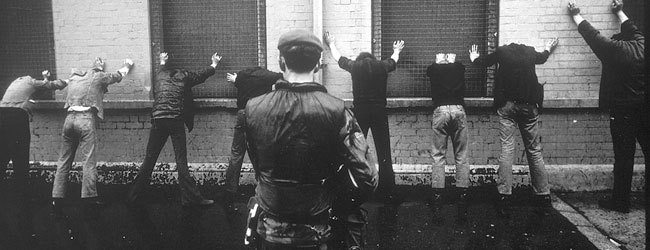
As Keefe notes, those in charge of the centers used a variety of psychological toture techniques including starvation, sleep deprivation, prolonged periods in stress positions, and exposure to high-pitched noises and sensory deprivation, these became known as the “Five Techniques” (”The Hooded Men”). These techniques were used on a specifically selected fourteen individuals, who later became known as the Hooded Men (”The Hooded Men”). As a result of the actions taken by the British military against these individuals, multiple Inter-governmental Organizations and Non-governmental Organizations opened human rights investigations aimed to address the rumored abuses. These organizations included: Amnesty International, Human Rights Watch, the European Union, the United Nations’ Office of the High Commissioner on Human Rights, and the British Government. These organizations investigated a variety of issues ranging from the internment, to policing abuses and the failure of providing a fair trial. All of the independent investigators held the belief that human rights abuses had occurred and were occurring within the centers. On May 2nd, 1974 the Irish government brought the accusations of torture to the European Commission on Human Rights where it was originally ruled as “torture,” which violated the European Convention for the Protection of Human Rights and Fundamental Freedoms (Donahue). However, following the ruling of the commission, the European Court of Human Rights felt that what had occurred did not constitute what was defined as “torture” but instead “inhuman and degrading treatment” (Donahue). This change of ruling demonstrates the importance of language used in cases dealing with gross violations of human rights. This change in language connects to the language and syntax choices of Lord Widgery and others in the British response to Bloody Friday. To change the language to something less than what it is changes the severity of the crime and makes it more palatable to discuss, as it changes the public’s perception of what is actually happening. In addition, it creates a dangerous precedent for other countries to follow by using this ruling as justification for torture.
This new ruling, in addition to the inconclusive report done by the British Government, led there to be little done for the fourteen individuals subject to torture during Operation Demetrius. In the present, the NGO, Amnesty International, has fought to reopen the case into the torture of the fourteen individuals and has succeeded somewhat. In 1971, Amnesty International had published an independent report on the internment centers and concluded that based on the definition of torture in the Universal Declaration of Human Rights the “Five Techniques” used were torture and is currently using this as basis for their new investigation (McKenna). In addition, Ireland appealed to the European Court on Human Rights to reconsider its judgement largely in part due to the findings of Amnesty International and the appeal of the fourteen individuals tortured, but it failed and was rejected in 2019 (“The Hooded Men”). Despite the loss, Amnesty International is still committed to investigating what occurred during The Troubles and will continue to do so despite the ruling in 2019 (“The Hooded Men”). The interment that took place during the Troubles created a new precedent of intelligence gathering that would continue into the present-day, and created a precedent on future rulings surrounding the use of torture during times of war. This precedent reflects the relevance of boundary definitions between what was acceptable practice in the context of the conflict and what was not. It connects to such similar legal and moral boundary quandaries as the distinction between combatants and civilians – as seen to be especially relevant in attacks like Bloody Friday – and illustrates the complexities of what can be defined as within legal and moral boundaries both during The Troubles and in their aftermath.

Works Cited
Deirdre E. Donahue, Human Rights in Northern Ireland: Ireland v. the United Kingdom, 3 B.C. Int’l & Comp. L. Rev. 377 (1980), http://lawdigitalcommons.bc.edu/iclr/vol3/iss2/4
“The Hooded Men: Torture, Lies and a Quest for Justice.” Amnesty International UK, 21 May 2020, http://www.amnesty.org.uk/hooded-men-torture-uk-ireland.
McKenna, Fionnuala. “Amnesty International Report on Allegations of Ill-Treatment Made by Persons Arrested Under The Special Powers Act After 8 August, 1971.” CAIN, cain.ulster.ac.uk/events/intern/docs/amnesty71.htm.
Melaugh, Martin. “Internment – Summary of Main Events.” CAIN , cain.ulster.ac.uk/events/intern/sum.htm.
Moriarty , Gerry. “Internment Explained: When Was It Introduced and Why?” The Irish Times , 9 Aug. 2019
 A Reader's Guide to Say Nothing