Written by Emily Goldstein
When Frank Kitson arrived in Northern Ireland during the early days of The Troubles he had already established himself as a highly respected officer, especially in the fields of counter-insurgency and peacekeeping. Having previously established success with counter-insurgency operations in Kenya during the Mau Mau Uprising in 1958, he was sent to Northern Ireland to coordinate the counter-insurgency operation in response to the rising violence in the region. Kitson was deployed to Northern Ireland from September 1970 to April 1972 (“Frank Kitson”). During this period, Kitson introduced a variety of tactics and strategies aimed at gathering intelligence. This included internment centers and the employment of the “counter-gang,” or informants inside the opposition group, to both gather “critical intelligence” as well as, “effectively confuse, divide and undermine the authentic organizations,” the IRA in the case of Northern Ireland (“Inside: Spies”). This use of “counter-gangs” was in coordination with interrogations that used the “five techniques” to gather information from those within the internment centers (“Frank Kitson”). As Keefe discusses, one major consequence of Kitson’s actions during the early period of The Troubles was the split between the Provisional IRA and the Official IRA leading to the formation of a paramilitary group that worked in direct opposition to Kitson’s forces. Furthermore, Kitson’s tactics and strategies were used even after his departure from Northern Ireland, consequently shaping the events that would occur throughout the Troubles.
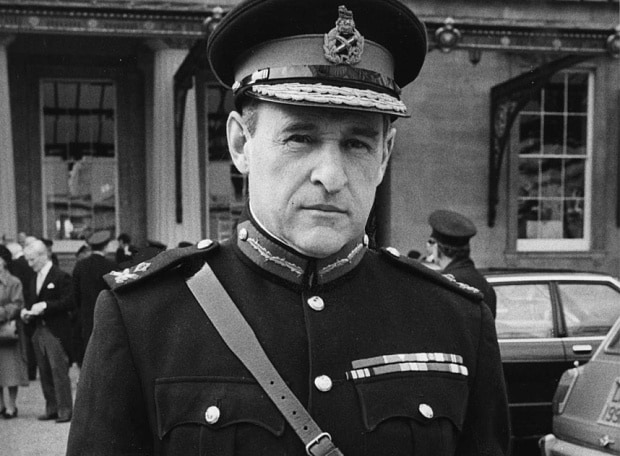
Kitson’s counter-insurgency strategy heavily relied on the operation of internment centers or a similar concept, such as isolation. This was employed by Kitson in both Northern Ireland and Kenya to gather the intelligence needed (Melshen 15). The use of the internment centers allowed for harsh techniques such as the “five techniques” to be used. This tactic was used by Kitson in order to gain intelligence, but also to determine who would be the best candidates to turn into the “counter-gang.” This was done by using what Kitson referred to as the “carrot-to-stick” approach. What this meant, was that the prisoner would be offered two choices, one that was terrifying or one comparatively more appealing (Melshen 15). This is because as Kitson notes “the system only works when a suitable incentive can be offered, when it can be balanced against a sufficiently horrific alternative and when an honorable reason for changing sides can be displayed” (Melshen 15-16). In the context of The Troubles, this can clearly be seen through the use of the “five techniques” and the threat of legal punishment for being associated with the IRA, both of which Keefe discusses.
The harsh reality of Kitson’s counter-insurgency strategy created a lasting legacy both in Northern Ireland and throughout the world. Following Kitson’s success in such operations, the United States adopted Kitson’s counterinsurgency strategy to use in counterinsurgency operations in conflicts such as the War on Terror. Kitson’s strategy was the leading strategy in countries such as Iraq (Teague). In addition, it has been used domestically to train federal and local law enforcement officers to combat domestic terrorism and gang violence (“Inside:Spies”). However, despite his strong lasting legacy in the security sector, today, Kitson faces legal repercussions due to his actions during The Troubles. In 2015, Kitson was sued over the wrongful death of Eugene “Paddy” Heenan as a result of “negligence and misfeasance in public office” (“Ex-army”).
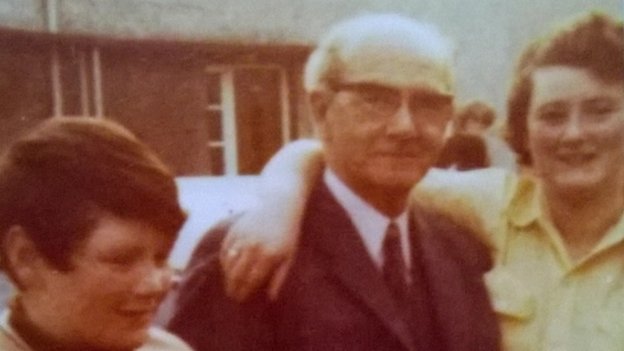
Meaning, Kitson is being sued because of the policies he implemented in Northern Ireland as part of his counter-insurgent operation (“Ex-chief”). The legal action taken against Kitson within a civil court, as compared to a military or criminal court creates a new precedent for liability in the context of war. This is because it allows others to file similar legal action previously not seen following conflict situations. Thus, creating a new opportunity for individuals in conflicts such as Afghanistan and Iraq to potentially come forward with accusations. The establishment of this new precedent speaks to the complex legal boundaries that accompany and define a conflict as nuanced and intimate as The Troubles, especially in the aftermath. Furthermore, it demonstrates that ramifications from conflict have no statute of limitations when it comes to the abuse of power. Therefore, this legal action taken against Kitson creates a precedent of accountability and liability in civil proceedings that has never been utilized in previous conflicts.
Works Cited
Covert Action Information Bulletin, Inside: Spies in the Movement , 24th ed., November 1985. Central Intelligence Agency .
“Ex-Army Chief General Sir Frank Kitson Sued over 1973 Killing in Belfast.” BBC, 27 Apr. 2015, http://www.bbc.com/news/uk-northern-ireland-32479485.
“Frank Kitson in Northern Ireland and the ‘British Way’ of Counterinsurgency.” History Ireland , 2014
Melshen , Paul. February 1986, pp. 1–80, Pseudo Operations .
Teague , Matthew. “Double Blind: The Untold Story of How British Intelligence Infiltrated and Undermined the IRA.” The Atlantic , Apr. 2006.
 A Reader's Guide to Say Nothing