Written by Devan Bugbee
On December 7, 1972, eight men and four women burst into the home of one year widowed Jean McConville and took her away (Day). This was not her first time being attacked in her home in West Belfast. She had been raised in the East as a Protestant, but after marrying a Catholic, she and her husband migrated to the West to escape the coldness of the Protestants. After the death of her husband, she also had many disagreements with the West Belfasters, especially since she would not take down her coat of arms that she was prideful in. Leading up to this tragic event, it was rumored that McConville was giving information to the British Army. One night, after leaving a Bingo hall, she was confronted by nationalist Irish extremists and beaten until she admitted to it and promised that she would stop (Maum). A few weeks later, those same insurgents, the IRA, showed up and took Jean from her home in front of her ten children, who are still fighting for justice for their mother today (Day). This was not the only murder the IRA committed, they admitted to eight more along with McConville’s in 1999, all showing to what extremes the IRA will go to suppress anyone who might be countering their cause, but what makes Jean’s stand out and is book-worthy is the ambiguity of Jean being a “tout,” as well as the relevance as her killer’s trials had ended in 2019 with the IRA winning and getting away with this tragedy. This was not because the judges agreed with the actions nor were they lacking in evidence. The Boston College tapes that got her murderers Gerry Adams and Ivor Bell arrested in the first place were ample for conviction. The reason they got away with this is that the court feared that justice would ruin the fragile peace between the North and South that Northern Ireland had fought hard to preserve.
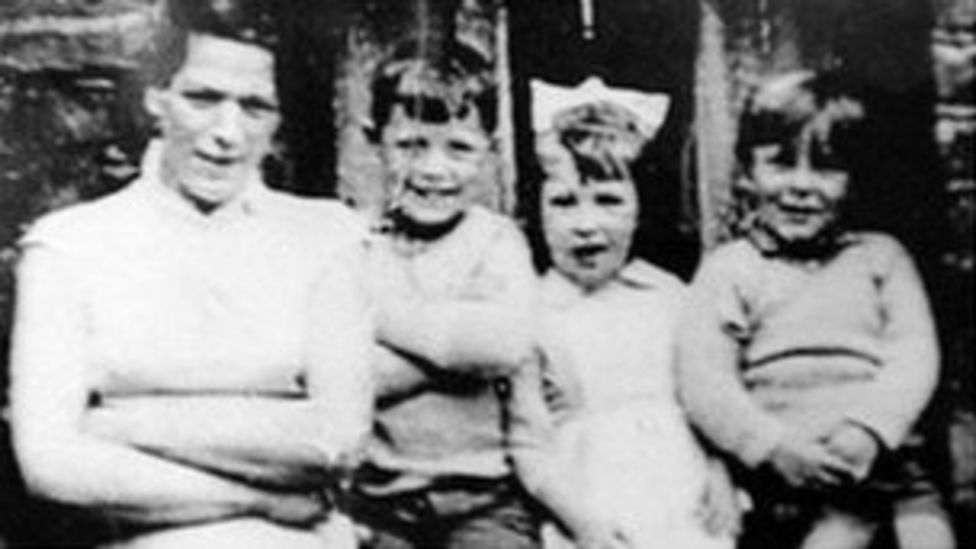
Jean’s crime was in her caring. She had been supposedly seen aiding a British Soldier, making her a target for the Irish Catholics where she resided who felt betrayed by her providing aid to who they deemed an enemy to the Irish unification movement. This only strengthened the rumors circulating that she was a secret informant. Brendan Hughes, one of the most active members of the IRA during the Troubles, claimed that before her murder, they found a radio transmitter that the IRA kept (Moriarty). An official investigation from the Northern Ireland Police Ombudsman debunked this claim (BBC, Jean McConville).
Despite evidence of involvement and being arrested for his supposed role in the kidnappings, IRA leader Ivor Bell was never charged for the murder of McConville and burying her body in Shelling Hill Beach. Ivor had been among one of few supposed IRA members interviewed for a Boston College project, but the court ruled the tapes where Ivor supposedly admitted to it could not be used in court. Part of this reasoning is because of a testimony from Gerry Adams, who was also a suspect after being named by Brendan Hughes and Dolours Price (The Guardian), denying that he could recognize him over the tapes. Gerry Adams, long time leader of the Sinn Féin party (the democratic socialist party of Ireland), denied he had any involvement, and so was never charged (BBC, Gerry Adams).

Concerns about these men getting arrested came from the concern of a rise in unrest. For the last few decades, The Troubles seem to have died down, and there is concern that if Northern Ireland were to convict prominent figures from the IRA that it would result in a comeback of The Troubles that they spent so much time to relieve. Though neither Adams nor Bell was charged, there was a smaller outcry from the McConville children who anxiously watched the case, wondering if their mother would receive justice. They, unfortunately, were disappointed. The Irish Times reported that five out of eight of the surviving McConville children watched in horror as their mother’s killer walked free from court with no charges. The McConville children, who are now adults, had to sit there as they listened to tapes of Ivor Bell say that his problem was not with killing her, but with burying her. In the tapes, when asked how Adams felt about burying Jean, Bell replied “Just she was [an informant]. She deserved to be shot” (Irish Times). Justice O’Hara was the one who ruled these tapes were not viable resources. He felt this way since the reporter interviewing Adams and Bell was not a “neutral interviewer” (Irish Times). The McConville children never got their closure, and with the justice system failing Jean is such a seismic way, it begs the question of whether it is better to preserve the fragile peace that they fought for or if the truth should be an end-all be-all guiding source.
Works Cited
BBC. “Jean McConville: “The Disappeared Mother-of-10”. https://www.bbc.com/news/uk-northern-ireland-27234413. Accessed November 24, 2020
Day, Elizabeth. “Jean McConvilles’ Daughter: ‘If I give Up Fighting, They’ve Won”. The Gaudian. https://www.theguardian.com/uk-news/2014/jul/06/jean-mcconvilles-daughter-give-up-fighting-helen-mckendry-ira. Accessed November 25, 2020
Maum, Patrick. “Dictionary of Irish Biography: McConville, Jean”. Royal Irish Academy. https://dib.cambridge.org/viewReadPage.do;jsessionid=9A88FA1012419901F995AB03D494D852?articleId=a5613&searchClicked=clicked&readsearch=yes. Accessed November 22, 2020
 A Reader's Guide to Say Nothing