Written by Eileen Reinhardt
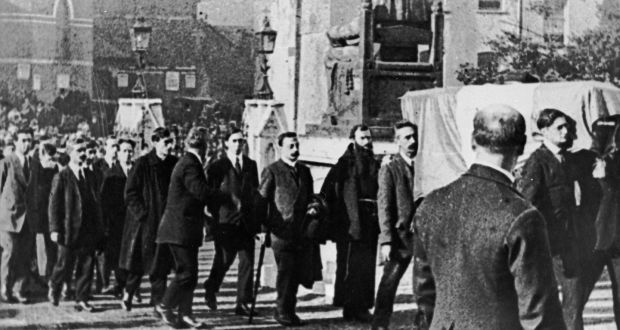
Terence MacSwiney was born in 1879 to Irish Nationalist parents in Cork, Ireland. He became a playwright, poet, and artist later in life, with much of his work focusing on Irish independence. MacSwiney was also involved in politics, as he participated in the 1916 Easter Rising. This resulted in his imprisonment and later released in 1917. He held positions in the Irish Government until 1920 when he became the Mayor of Cork. During his inaugural address, he said: “it is not they who can inflict the most, but they who can suffer the most, who will conquer” (Perlman 309). This saying would apply to his later life and inspire the mindset of future Irish Nationalists. A few months after becoming mayor, MacSwiney was arrested while meeting with the Cork No. 1 Brigade and charged with possession of a police cipher (Perlman 309). After his imprisonment, he immediately went on a hunger strike and died 74 days later. Over 30,000 mourners attended his funeral and he became known as a patriot, martyr, and hero by many Republicans (Perlman 314). His coffin bore the inscription “Murdered by the Foreigner in Brixton Prison” in Gaelic, directly showing his ties to Irish republicanism, culture, and anti-British sentiment (Keefe 178).
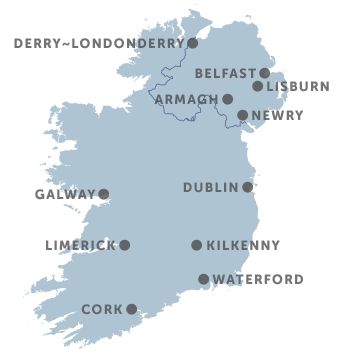
Terence MacSwiney became a symbol for many Irish Nationalists. His decision to go on a hunger strike and later death cemented the use of food and hunger strike as a form of resistance against the British. The British might be able to control the location and treatment of the Irish prisoners, but the Irish prisoners’ refusal to eat signifies the reassertion of direct control over their bodies, directly defying the British. MacSwiney’s actions and words “articulated a philosophy of self-sacrifice that would help define the emerging traditions of Irish republican martyrdom” (Keefe 178). This element of self-sacrifice was seen throughout the psyche of IRA members like Gerry Adams, Brendan Hughes, Bobby Sands, and Dolours Price. Bobby Sands and Dolours Price are particularly good examples of how far they took the idea of self-sacrifice as they actually went on hunger strike, with Bobby Sands paying the ultimate price of death.
MacSwiney’s impact on Bobby Sands can be seen through the entries in Sands’ prison diary which documents his first seventeen days on hunger strike. He starts with invoking the ideas of martyrdom and sacrifice associated with MacSwiney, writing: “I believe I am but another of those wretched Irishmen born of a risen generation with a deeply rooted and unquenchable desire for freedom” (Sands). This shows how Sands believes that his role is to continue the struggle and sacrifice himself like MacSwiney did for the cause of Irish freedom. Sands continues to invoke MacSwiney throughout his diary, writing that MacSwiney is “in my thoughts” as he continued the process of his hunger strike (Sands). Towards the end of his prison diary and hunger strike, Sands writes: “I have poems in my mind, mediocre no doubt, poems of hunger strike and MacSwiney, and everything that this hunger-strike has stirred up in my heart and in my mind, but the weariness is slowly creeping in, and my heart is willing but my body wants to be lazy, so I have decided to mass all my energy and thoughts into consolidating my resistance” (Sands). This is particularly telling of MacSwiney’s impact on Sands in many ways. Sands is imitating MacSwiney not only through writing poetry but also through hunger strike, showing how Sands truly did want to emulate MacSwiney in more ways than one. Thinking about MacSwiney reminded Sands of the purpose of his hunger strike and gave him the strength to continue his resistance, showing MacSwiney’s impact on future generations of Republicans.
Just like MacSwiney, Bobby Sands’ hunger and strike and death generated international attention, attention to the Irish independence cause, and produced an overwhelming support from the Northern Irish Catholic population. This shows the continuation of using food and hunger strikes as an act of resistance, showing how personal MacSwiney’s story was to republicans and members of the IRA.
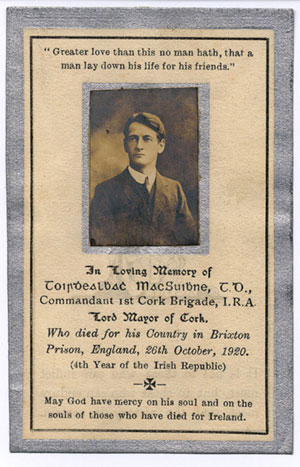
In thinking about the actions of people like Bobby Sands and other members of the IRA, it is important to study their use of history to further their cause. The idolization of Terence MacSwiney is a good example of Nationalism’s need to create a linear timeline of connection. Many members of the IRA saw MacSwiney as someone who sacrificed everything for his belief and determination to see a united Ireland. They used his death as an example of appropriate behavior, seeing death as an honor. If one sacrificed themselves like MacSwiney did, they continued the story of self-sacrifice and struggle for liberation. Understanding the history behind stories like MacSwiney’s and how they became implemented into the Republican’s stories and psyche is crucial to understanding their actions. When people grow up hearing stories like MacSwiney’s, it cements the idea that independence should be achieved by any means necessary. Realizing this allows for a greater understanding of how and why the IRA acted the way they did, and how using historical events like Terence MacSwiney’s death had consequences.
Works Cited
Keefe, Patrick Radden. 2019. Say Nothing: A True Story of Murder and Memory in Northern Ireland. New York: Anchor Books.
O’Farrell, Fergus. 2018. “Brixton Remembers One of Ireland’s Most Famous Hunger Strikers.” The Irish Times. Oct. 18. https://www.irishtimes.com/culture/books/brixton-remembers-one-of-ireland-s-most-famous-hunger-strikers-1.3674378
Perlman, Jason. “Terence MacSwiney: The Triumph and Tragedy of the Hunger Strike.” 2007. https://www.jstor.org/stable/pdf/23187329.pdf?refreqid=excelsior%3A24b62cd4a89a4da14a708bc96ed13310
Sands, Bobby. “Prison Diary.” The Bobby Sands Trust. https://www.bobbysandstrust.com/writings/prison-diary/
Scull, Maggie. 2020. “The Three Funerals of Terence MacSwiney.” The Irish Times. Oct. 24. https://www.irishtimes.com/culture/heritage/the-three-funerals-of-terence-macswiney-1.4387267
Tourism Ireland. “Ireland’s Cities.” https://www.ireland.com/en-us/articles/regions/ireland-cities/irelands-cities/
 A Reader's Guide to Say Nothing