Written by Emily Goldstein
The Partition of Ireland Act of 1920, what it was and its effects, is a critical part of understanding the history of the tension in Northern Ireland and the violence that broke out during the 1970s. This act, also known as the Government of Ireland Act of 1920, established two separate parliaments for the state of Ireland, one in the Southern region and one in the Northern region (“Government”). Under this act, the Northern and Southern regions of Ireland split with the intention to still be under British control and governance. This act came to fruition following the Home Rule movement that originated in the early 1800s following the initial union with Britain in 1801 (McConnel). The Home Rule Movement peaked in 1916 with the Irish War of Independence that would give the power of Home Rule to the Protestant majority in Northern Ireland despite the movement beginning with Catholic Nationalists (McConnel). This origin of the Home Rule Movement, along with the Irish War of Independence alluded to the tension between the two groups present long before The Troubles began. With the passing of the Partition of Ireland Act in 1920, following the War of Independence the tensions only grew.
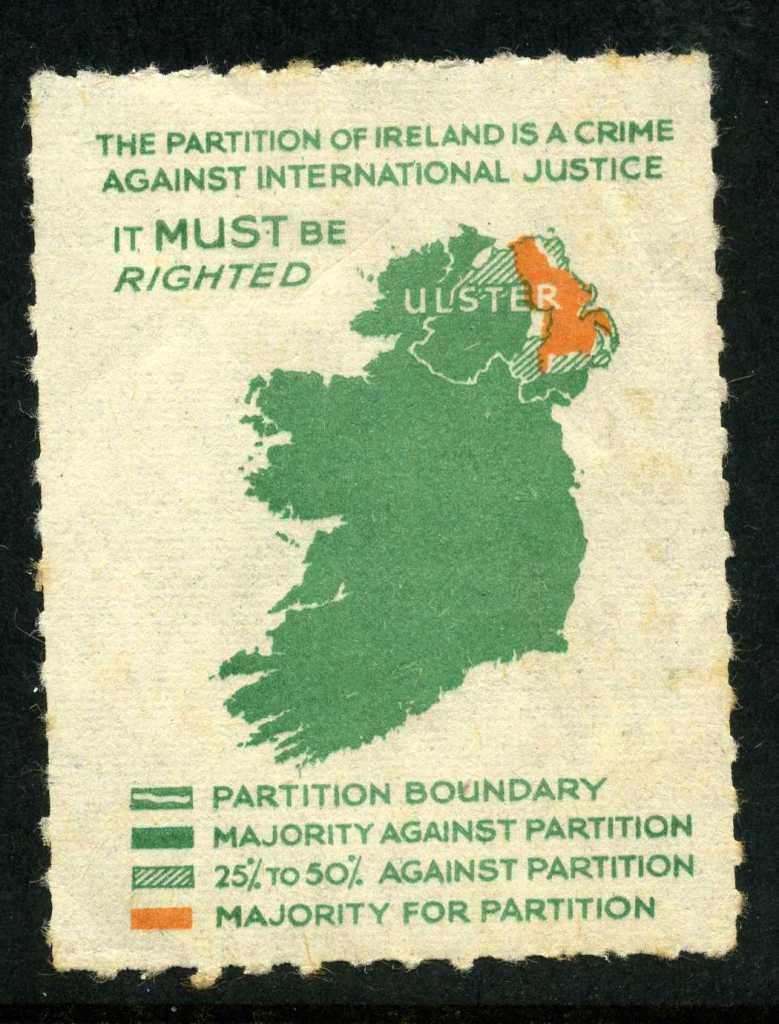
Under the Partition of Ireland Act, Ireland was split, creating the Irish Free State in the Southern region, and keeping the remaining Protestant counties in the Northern Region under the control of the British with Home Rule implementation (Moore). Within this Act, it was written that there would be an “eventual establishment of a Parliament for the whole of Ireland” (“Government”). This meant that eventually in theory, the counties in the North would eventually become a part of the Southern region. In addition, the Act left the British in control of the defence, trade, currency and foreign affairs of both regions of Ireland (“Government”), thus preventing the regional governments from doing much in terms of governing further or effecting any real change. Therefore, it comes as no surprise the Unionists were largely in favor of the Act while the Nationalists opposed it. This furthered the sectarian violence in the region because the Catholic Nationalists wanted separation from the British while Protestant Unionists held the majority and did not want to separate themselves from Britain. The led the British Parliament to introduce and subsequently pass the Anglo-Irish Treaty of 1921 in order to prevent the outbreak of War between the Irish and Britain (Ferguson).
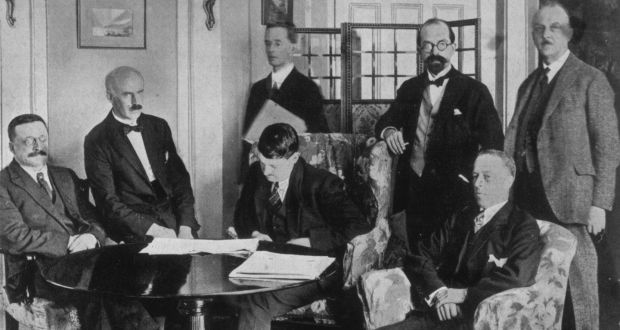
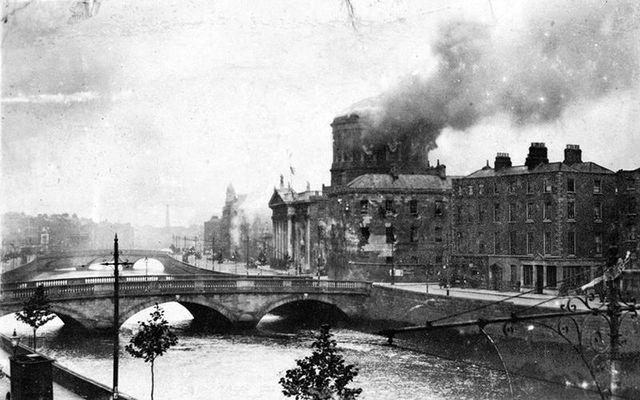
The Anglo-Irish Treaty was created in an attempt to quell the increasing violence following the Government of Ireland Act of 1920. Under this Treaty, the Southern region of Ireland, with a large Catholic majority, became the Irish Free State with the right to levy taxes, engage in foreign trade and form a standing army (Ferguson). However, it failed to recognize the Southern region as separate from the British, so the Irish Free State was a self-governing body within the “confines of the United Kingdom” (Ferguson). However, the “powers of the Parliament and Government of the Irish Free State shall no longer extend to Northern Ireland” (McKenna), therefore causing the Republicans within both the South and North to be upset with this new treaty. As a result, the Irish Civil War began, fought between the Irish Republican Movement (IRA) and British forces (Dorney). These events, following the Partition of Ireland Act of 1920 lay the foundation for the conditions leading The Troubles to form. This is because both fail to address the concerns of both the Unionists and Republicans. In addition, both fail to address the tensions between the two religions and do little to address it within Northern Ireland causing them to grow further, eventually laying the groundwork for The Troubles to begin.
Work Cited
Dorney , John. “The Irish Civil War – A Brief Overview.” The Irish Story, 2 July 2012, http://www.theirishstory.com/2012/07/02/the-irish-civil-war-a-brief-overview/#.X9V_vC2z1Q.
Ferguson, Sharon. “90th Anniversary of Signing of Anglo-Irish Treaty.” BBC , 6 Dec. 2011, http://www.bbc.com/news/world-europe-16049234.
Great Britain, Government of Ireland Act, 1920, 1920, pp. 1–76.
McConnel, James. “Irish Home Rule: An Imagined Future.” BBC History, 17 Feb. 2011, http://www.bbc.co.uk/history/british/victorians/home_rule_movement_01.shtml#two.
McKenna, Fionnuala. “The Anglo-Irish Treaty, 6 December 1921.” CAIN , cain.ulster.ac.uk/issues/politics/docs/ait1921.htm.
Moore, Cormac. “A Century on: How Partition Divided Ireland and Why It Still Matters.” The Irish Times , 2 Oct. 2020, http://www.irishtimes.com/culture/heritage/a-century-on-how-partition-divided-ireland-and-why-it-still-matters-1.4370347.
 A Reader's Guide to Say Nothing